

By Ayse Kotan
Blog 75
27 May 2023
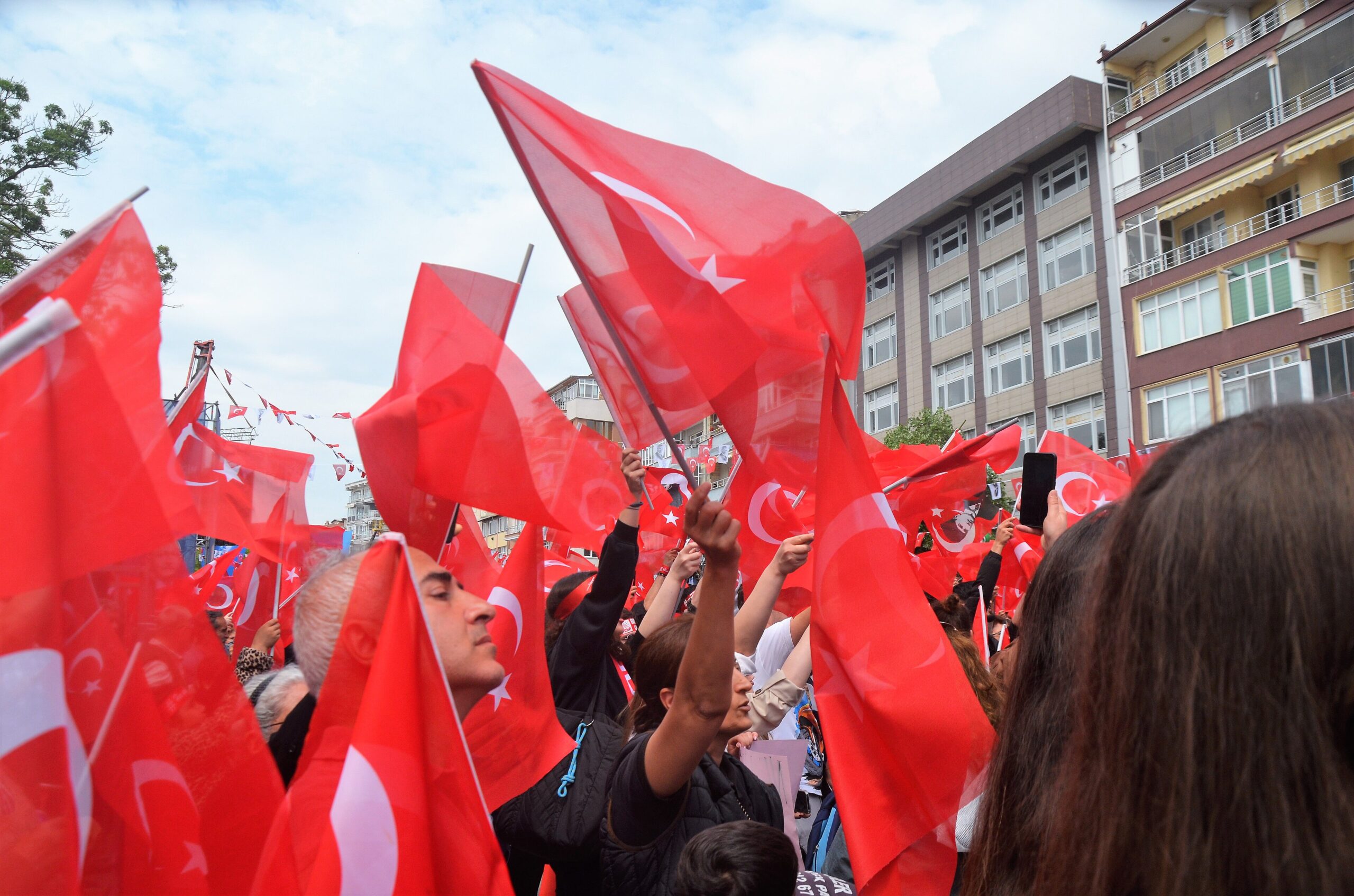
The first round of the 2023 elections in Turkiye was challenging for me, as it was for many other voters. I was sure who I would vote for until the last two elections. However, I started questioning my position due to the increasing corruption at every level of society, injustices, polarization, divisive language, the selection of controversial candidates as deputies, and, most importantly, the new presidential system. I no longer felt comfortable voting for Cumhur Alliance and became hesitant to vote altogether unless there was a credible alternative candidate. In the past few months, I have found myself in a dilemma, but neither side of this dilemma involved voting for AKP. I looked forward to seeing the opposition’s candidate and would decide my vote accordingly, as the opposition seemed worth considering for the first time in many years. They aimed to appeal to all segments of society and bring about the change that Turkiye desperately needs. The Millet Alliance seemed more inclusive by incorporating a range of ideologies, including Islamist parties. However, when they announced Kemal Kilicdaroglu, the leader of CHP, as their candidate, I was disappointed: the Millet Alliance was offering was not what I had hoped for.
Firstly, as someone who has suffered greatly from the oppression of Kemalism and CHP, there was no way I could support someone like Kilicdaroglu. Furthermore, the hypocrisy of the Millet Alliance became clear. They ask people to vote for them by blaming Erdogan for being authoritarian. However, they forced Kemal Kilicdaroglu as their candidate, who has never won against Erdogan. When Meral Sener left the coalition due to her dissatisfaction with their candidate, the pressure against her revealed their authoritarian streak. Even though she agreed to rejoin the alliance, pressure escalated against Muharrem Ince, another presidential candidate, and led him to withdraw his candidacy. I could not help wondering what happened to their slogans for more democratic governance? What kind of tyranny we would experience if they were ever to win the election. It became clear that the inclusive language they used as a policy was only for those they deemed to be on their side. Regardless of whom I voted for, I would always be seen by the Millet Alliance as someone who not a legitimate member of society, an outsider if not an antagonist. The writing was on the wall a victory for the Millet Alliance risked all the the progress made in the last 21 years.
Secondly, the refugee policies of the Millet Alliance were another crucial factor in my decision. I had become accustomed to the oppression under the secular/Kemalist regime and had somewhat grown used to it. However, I couldn’t vote for someone who intended to repatriate Syrian people and subject them to the horrors of the Baathist regime. Additionally, there was no guarantee that once the Syrian people were expelled, another ethnic group wouldn’t become the target (as had happened to the Kurds before), further fuelling racism and Islamophobia. I wondered what would prevent them from excluding specific segments of society from being considered Turkish. In contrast, to the opposition leaders who promised to expel the Syrian refugees immediately. Erdogan still responded to questions about his position on Syrian people in Turkiye by referring to them as either brothers and sisters or Muhacir (Muhajeeran) instead of refugees. After the first round he went on to say: “We cannot send Syrian people back who are in a position of life or death”[1].As someone who opposes all forms of racism and discrimination in actuality rather than performatively, I felt I had no choice but to vote, reluctantly for Erdogan and AKP.
I cast my vote one week before the election as I live in another country. Even though I had already voted for Erdogan and AKP, I couldn’t help but feel guilty and question whether I had made the right decision. However, my doubts were dispelled in the last week. The opposition’s inclusive language vanished, replaced by orientalist stereotypes and hateful rhetoric among their supporters. They began threatening to expel people who supported AKP/Erdogan, or those they think supported them. Their antics (under-reported by the Western media) made it clear if the Millet Alliance won I couldn’t envision a future where women could attend university, visit hospitals/libraries, or public places while wearing the hijab, or walk freely on the street without being attacked or humiliated. My fears were confirmed after the first round when it became evident that there would be a second round; their previously soft and unifying language took on a more aggressive and orientalist tone. It became apparent that this language and discrimination extended not only to refugees but also to the people who voted for the Cumhur Alliances. For example, some tweets of the supporters of the opposition explicitly expressed that the earthquake victims deserved their suffering and wished for their death instead of voting for Erdogan. Furthermore, despite initially providing free shelter in their towns for those affected by the earthquakes, certain opposition-led councils later canceled this aid due to the higher percentages of support for AKP and Erdogan in the affected areas.
Some may interpret the results of the first round election in Turkiye as a vote of confidence in Erdogan and AKP; but this would be a mistake. I did not vote for Erdogan/AKP rather I voted against the Millet Alliance. I ultimately chose to vote for Erdogan not because it was the better option for a better future but to avoid a worse outcome.
Footnotes:

Related Blogs

Of Those who Don’t get to be Cockroaches
Image credit: Photo taken by Shaheen Abdulla, July 2026. Photo used with permission. Since 2014, India has been governed by Hindutva ethnonationalism, intensifying decades of structural marginalization of Muslims through state-sanctioned impunity and systematic...

The Rebel Team: Football and Algeria’s Liberation
Image credit: Wikimedia: https://commons.wikimedia.org/wiki/File:Jubilee_FLN_soccer_team_1974.jpg (Mustapha Zitouni standing, 5th from the right; Rachid Mekhloufi sitting, 2nd from the right) History reminds us that, like literature and art, football can embody a...

Reflections on Islam, Muslimness and Decolonisation – I
*Yasin Aktay’s four-part series is a contribution to Critical Muslim Studies that critically engages with S. Sayyid’s Recalling the Caliphate as a means of reflecting on the contemporary manifestations of the Muslim Question.Image credit: photographs by Johanna Loock,...