

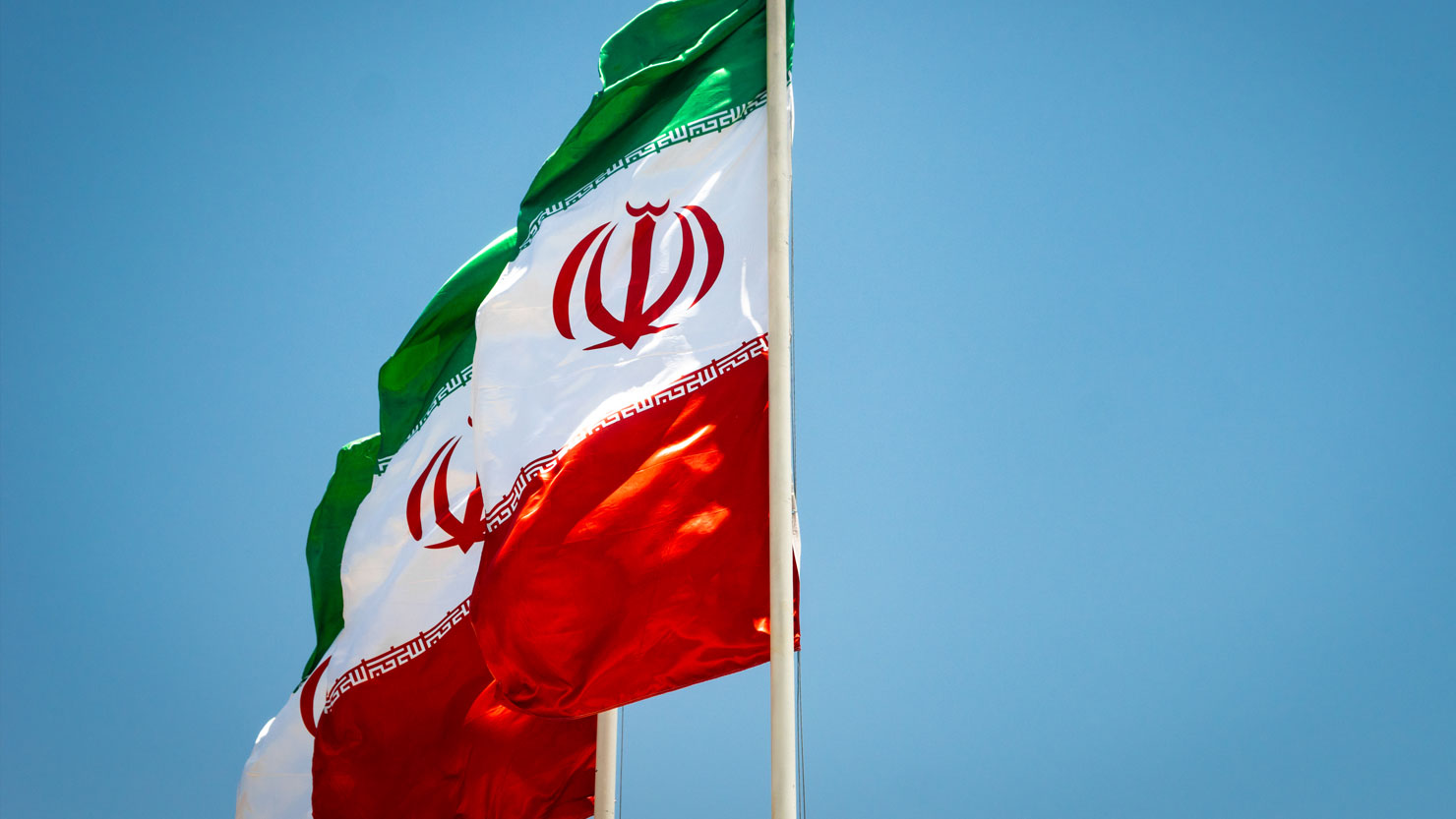
I recently attended an international conference in South Africa on re-evaluating civil society in the Middle East following the 2010-2011 Arab uprisings that failed to bring about lasting changes in the region. There were progressive academics, politicians and leaders of non-governmental organisations in attendance. I had prepared a paper based on my research of welfare and social services in the Islamic Republic of Iran, which I knew was quite radical. However, my presentation created controversy for different reasons than I expected.
I thought it would be the conceptualisation of my research that was shocking. During my graduate studies, I spent years studying Islamic revolutionary foundations in Iran, modelled on Islamic endowments, vaqf (s) and awqaf (pl) in Persian. After the Shah was overthrown in 1979, the state confiscated the wealth and properties of the Pahlavi family in service of the revolutionary movement, transferring this to newly created Islamic foundations, known as bonyads, to provide essential social services to millions of Iranians. The bonyads are neither public nor private and are often described as parastatal. Unfortunately, when I went to Iran to conduct exploratory field research in 2008, it was too difficult – as an American citizen – to access the bonyads. So instead I focussed on the government welfare system, based on the secular liberal model that is dominant in European countries.
In the paper that I delivered in Pretoria, I explain how Iran’s government welfare system is culturally reproducing the secular liberal ideals that sustain the modern bureaucracy and capitalist free markets in the West: as Offe (1984: 98) points out, here welfare policy is not created in response to the needs of the working class, but instead “contributes to the constitution of the working class”. Whereas the bonyads operate by an entirely different logic based on other values – needs, faith, obligatory love, loyalty, good neighbourliness – that are meant to reproduce an Islamic revolutionary consciousness. Whether these foundations are successful in this mission was not something I could assess; the point I was making is that they are responding to a social need that is different to that of a capitalist society, and therefore ought to be assessed according to their own standards.
Cue disbelief, if not horror, from my co-panellist and many members of the audience. The argument that the secular liberal welfare state had limitations that the bonyads could account for was not welcomed, not because they disrupt contemporary conceptualisations of the state, as I intended, but rather they undermine the capacity of Western secular liberalism “to be the grammar of the world order” (Sayyid 2003).
In other words, I was suggesting the possibility of not only there being alternative systems of state-society relations that do not revolve around an understanding of the world that is centred in the West, but also that the Islamic Republic could be a model to aspire towards. And the latter is why audience members were so shocked. Sayyid (2014) argues that secular liberalism “generates Muslims as permanently transgressive subjects,” outside of but not alternative to Eurocentric ways of knowing and being. As Brown (2009: 10) adds, “today the secular derives much of its meaning from an imagined opposite in Islam, and, as such, veils the religious shape and content of Western public life and its imperial designs”.
This is why after my paper, audience members immediately raised the negative characteristics of the Iranian state and economy, many of which are legitimate. But that is beyond the point: there are a similar number of critiques that any reasonable person could raise about Western states and economies. However, none of them are enough to stop academics, as well as institutions like the World Bank, United Nations and International Monetary Fund, from promoting the Western model of the modern welfare state.
During the Cold War, Gerschenkron (1968) critiqued the Anglo-American only model of industrialisation, calling it the typology of Western development. Since the collapse of the Soviet Union, the situation is only more extreme. The rules of the game are so firmly centred in the West that any attempt to suggest an alternative grammar for making sense of our human relations is so disruptive that it causes horror and disbelief.
Despite Washington’s aggressive foreign policy, which has included draconian sanctions on the Islamic Republic in recent decades, crippling its ability to trade, the country is still sovereign. Furthermore, Iranians are better off now socioeconomically than under the Shah, even when using the language of the Eurocentric world order. Back in 1977, 28 per cent of urban and 66 per cent of rural populations were living in poverty; but by 2004, these rates had plummeted: only 1 percent of the urban and 7 percent of the rural populations were considered poor (Salehi-Isfahan 2006). Under the Shah, the Gini index of inequality was around 0.5, but has remained about 0.4 since the revolution, similar to in the United States.
And yet, the grammar of the world order only allows for promoting the American (or Western) model as something to aspire towards. Accordingly, many audience members assumed that the Iranian model is by nature “backwards, authoritarian and corrupt”. One audience member complained that the bonyads stifle competition, as if having winners and losers in a social system is actually desirable. Another pointed to the lack of transparency in the system; yet relations of trust are never transparent. This is the nature of faith.
Fortunately, there were some in the audience who recognised that the Iranian system is also disruptive the hegemony of Western secular liberalism. Where once the world had Communism as an alternative, countries like Iran are now forging their own way forward, adopting a hybrid model that suits their own cultures and histories, running against the orthodoxy. Indeed, the fact that the Islamic Republic has crafted its own grammar, centred around Islam, is indicative of the crisis of Western liberal democracy in our new multi-polar world. Our ability to read Iran therefore requires not only an understanding of this grammar, but also a commitment to actually taking decolonial possibilities seriously.
Cited Works
Brown, Wendy (2009) ‘Is critique secular? Blasphemy, injury and free speech,’ The Townsend Papers in the Humanities, Number 2.
Gerschenkron, Alexander (1968) Continuity in History and Other Essays (Cambridge: Harvard University Press).
Offe, Claus (1984) Contradictions of the welfare state (Cambridge: The MIT Press).
Salehi-Isfahan, Djavad (2006) ‘Revolution and redistribution in Iran: How the poor have fared 25 years later,’ paper presented to the Third Annual World Bank Conference on Poverty, Washington DC, June 5–6.
Sayyid, Salman (2014) Recalling the caliphate: Decolonisation and world order (London: Hurst).
— (2003) A Fundamental Fear: Eurocentrism and the Emergence of Islamism (New York: Palgrave)

Related Blogs
Reflections on Islam, Muslimness and Decolonisation – I
*Yasin Aktay’s four-part series is a contribution to Critical Muslim Studies that critically engages with S. Sayyid’s Recalling the Caliphate as a means of reflecting on the contemporary manifestations of the Muslim Question.Image credit: photographs by Johanna Loock,...
Reflections on Islam, Muslimness and Decolonisation – II
*Yasin Aktay’s four-part series is a contribution to Critical Muslim Studies that critically engages with S. Sayyid’s Recalling the Caliphate as a means of reflecting on the contemporary manifestations of the Muslim Question.Image credit: photographs by Johanna Loock,...

Reflections on Islam, Muslimness and Decolonisation – III
*Yasin Aktay’s four-part series is a contribution to Critical Muslim Studies that critically engages with S. Sayyid’s Recalling the Caliphate as a means of reflecting on the contemporary manifestations of the Muslim Question.Image credit: photographs by Johanna Loock,...