
This blog post is part of the blog series After the Caliphate: Sovereignties and Subjectivities.

By Amanie Antar
Blog 113
17 June 2025
Spain | Iberia | 1500 | Forced conversion | Morisco | 1492 | After the Calipha
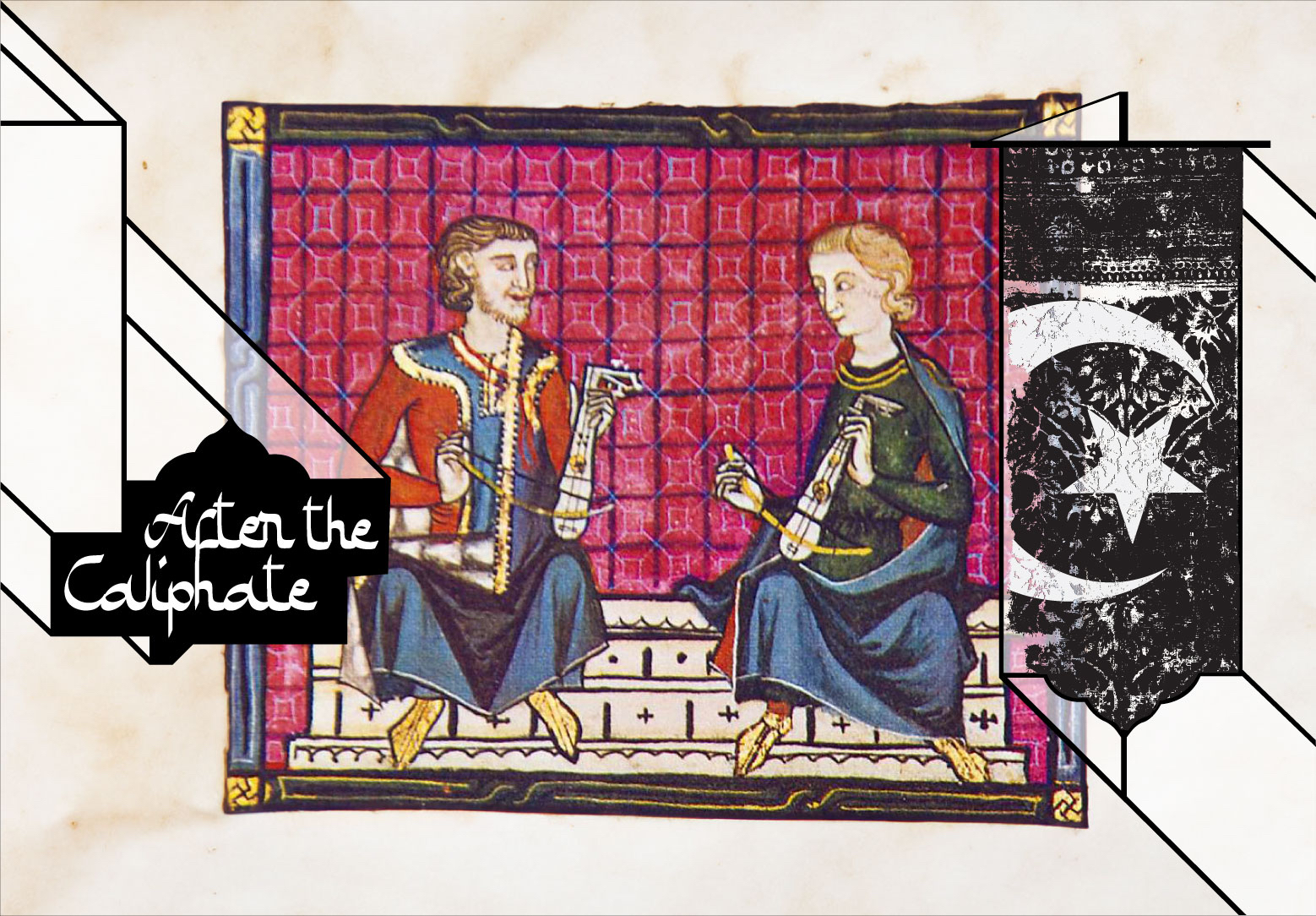
Image: Wikimedia Commons

The concept of the Caliphate and the subsequent possibilities it offers in the realm of political, epistemological, pietistic and decolonial iterations appears immense and, in some ways, revolutionary. Revolutionary in that its applicability to a multitude of social, religious and political configurations appears endless and profoundly connected to almost primordial conceptions of the Islamicate that were first established in the prophetic community and that continue to dispute and contest Eurocentric formations of the nation state throughout the medieval and early modern period. Through an examination of the historical record, particularly in the early modern period, where do visions of the Caliphate—as intricately connected to transhistorical and atemporal realities—emerge? How do these visions, particularly for historically marginalized communities, lead to redemption, vindication, even salvation? The historical experience of Moriscos—former Muslims and their descendants who converted to Catholicism following mass forced baptisms in 1500—illustrates the revolutionary possibilities of salvific illustrations of the Caliphate in their imaginary.
I endeavor to examine how the transcendental plane is one of the most revolutionary modalities for the mobilization of peoples in contesting and challenging state ventures which seek to harness and/or extinguish competing “theological epistemic structures.” When visions of sovereignty are no longer tethered to early modern nation state projects or even contemporary ideological constructs, projects, or agendas, it is in this moment when they are deemed deeply antithetical to the state and its imperial motives. When the revolutionary potential of a community emerges from eschatological or apocalyptic readings of scripture and history, salvific sovereignty manifests and becomes a compelling force for political mobilization and solidarity.
For many Moriscos in post-1492 Iberia, the site of decolonial thought resided in apocalyptic prognostications or jófores. Eschatological and pietistic visions of liberation established a future beyond Spanish colonial imageries. Historically, Muslim apocalyptic literature developed as part of the hadīth corpus with prognosticative proclamations attributed to the Prophet. Circulating in Aragon and Castile during the fifteenth and sixteenth centuries, these texts were written in aljamiado (one linguistic locus of decoloniality) and frequently narrated historical moments of certain Muslim groups over time. They included events that would occur to the Muslim umma at the End Times. In one prophecy depicted in an apocalyptic text, the Prophet narrates the tribulations that the last Muslims of the Iberian Peninsula will experience. However, redemption is near for the Prophet promises the Morisco community that God will send a king who will reinstate Islam (and the Caliphate) in the Peninsula. A fundamental message in these apocalyptic texts is an admonition to the Moriscos to refrain from their apathy and ruminate on the “agitations of the Day of Judgment and the fury of hell, with its fires,” and to “turn to God and do not sleep, for you will wake up buried under rubble.” These messages did not remain dormant but were productively deployed.
The political dimension jófores played in mobilizing Moriscos is known. In his Rebelión y castigo de los moriscos de Granada, Luis del Mármol de Carvajal emphasizes the role apocalyptic prophecies played in igniting the Alpujarras rebellion (1568-71). Moriscos developed and deployed apocalyptic prognostications which “served as a catalyzer for Morisco resistance to Christian monarchical power.” Yet in my view, jófores presented a unique portrayal of individual and collective realization (predicated on the apocalyptic) while simultaneously conveying a productive future whereby Moriscos were at the forefront of a victorious destiny. This is no small feat when surrounded by hegemonic forces seeking to stifle competing epistemic formations and religious identities through inquisitorial and mandated forms of oppression in the sixteenth and seventeenth centuries. These texts imagined a piety severed from Catholicism and established a political future steeped in apocalyptic and eschatological vindication. It is critical to reflect on the ways in which jófores revealed Moriscos’ attempt to contend with the meaning and purpose of history as a “community living under Christian rule, subject to Christian law and the power of the Inquisition by virtue of their ‘conversion’”. This attempt reflects the construction of a competing epistemic structure whereby Moriscos envisioned and communicated an alternate, yet no less viable, vision of eschatological justice in which the Caliphate was boundless. This leads one to inquire: if the Caliphate defies “the logic of the nation,” in what ways do prophecies and the narratives they express “conceptualize a community of believing people unified by faith and transcending national state boundaries” in an eschatological sense? How do these narratives become a centrifugal force propelling communities towards new horizons of political and spiritual realization?
Lastly, this author remains deeply invested in anti-imperial struggles that have historically originated and developed outside Eurocentric notions of emancipation and liberation. In this vein, what does sovereignty truly entail for a people whose notion of freedom transcends the temporal and material confines of the historical/political moment in which they inhabit? In what ways does such a vision of sovereignty become impermeable to imperial/state restrain, rejection or even retaliation? How do the sources attest to this compelling reality? Eschatological images of salvific sovereignty for Moriscos in post-1492 Iberia offers some illuminating historical possibilities to consider. Exploring the experience of Moriscos can elucidate and enrich analysis of other subjugated communities across time and space who develop and invoke transformative and potent transhistorical, decolonial visions of emancipation (occasionally relying on a vindicated image of the Caliphate) that move beyond Eurocentric paradigms of freedom.
Author’s bio
Amanie Antar is a PhD candidate in the Department of History at Queen’s University, Canada. As a PhD candidate in early modern Spanish history, her research concentrates on the fascinating religiosity of the Moriscos, the last Spanish Muslims to be forcibly converted to Catholicism in 16th century Spain. She is intrigued by the ways in which crypto-Muslims in the Morisco community attempted to preserve and retain their Islamic identity using eclectic, innovative and (occasionally) syncretic means.

Related Blogs

The Rebel Team: Football and Algeria’s Liberation
Image credit: Wikimedia: https://commons.wikimedia.org/wiki/File:Jubilee_FLN_soccer_team_1974.jpg (Mustapha Zitouni standing, 5th from the right; Rachid Mekhloufi sitting, 2nd from the right) History reminds us that, like literature and art, football can embody a...
Reflections on Islam, Muslimness and Decolonisation – I
*Yasin Aktay’s four-part series is a contribution to Critical Muslim Studies that critically engages with S. Sayyid’s Recalling the Caliphate as a means of reflecting on the contemporary manifestations of the Muslim Question.Image credit: photographs by Johanna Loock,...
Reflections on Islam, Muslimness and Decolonisation – II
*Yasin Aktay’s four-part series is a contribution to Critical Muslim Studies that critically engages with S. Sayyid’s Recalling the Caliphate as a means of reflecting on the contemporary manifestations of the Muslim Question.Image credit: photographs by Johanna Loock,...