

By Shaheen Kattiparambil
Blog 141
11 September 2026
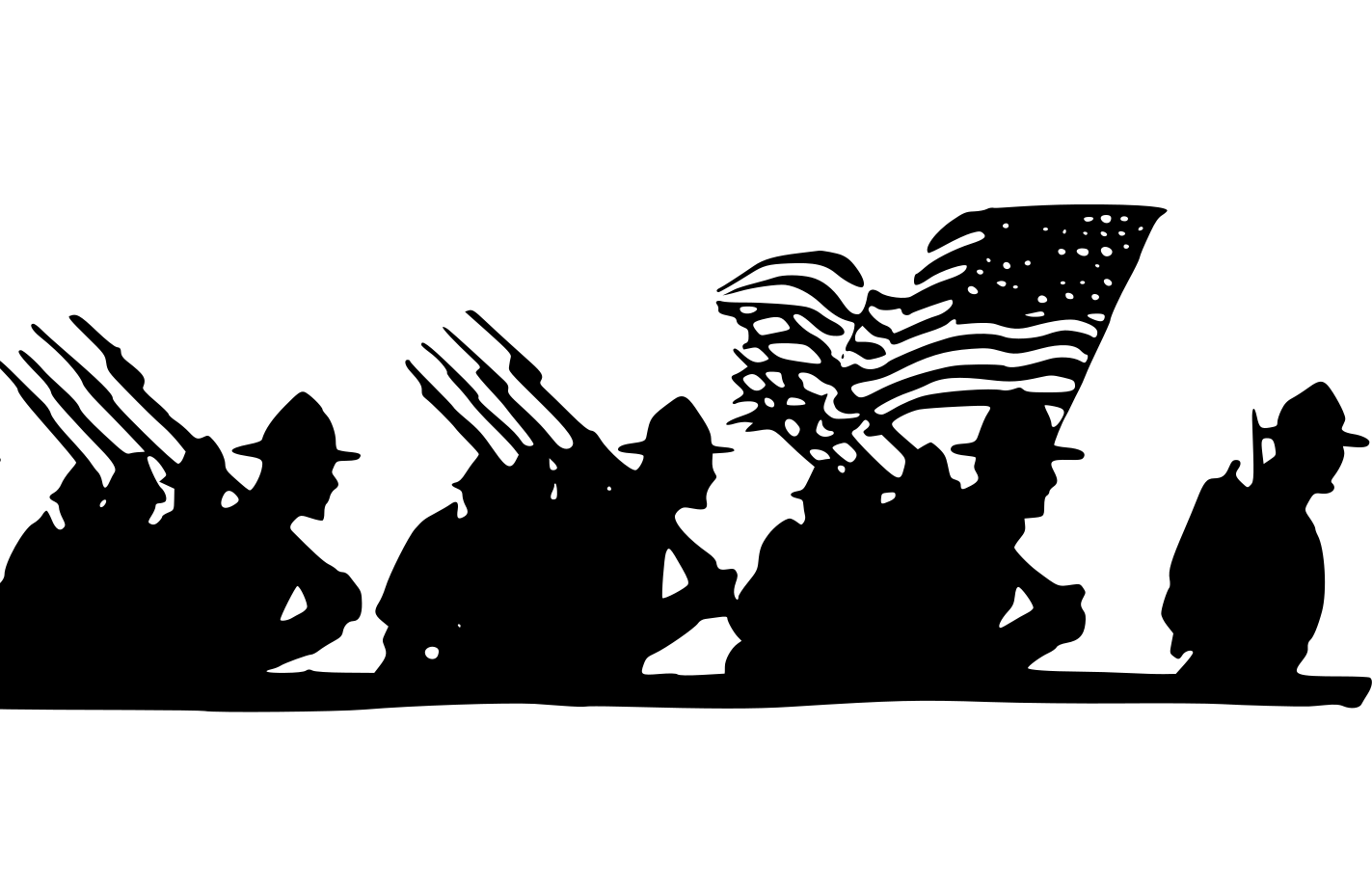
Image credit: Pixabay (Free to use)
Twenty-five years after 11 September 2001, the Global War on Terror (GWOT) appears, at first sight, to belong to another political moment. The occupations of Afghanistan and Iraq no longer organise Western political discourse in quite the same way and the language of a singular global “war on terror” has receded, while the genocide in Gaza, the resurgence of the far right and new geopolitical crises appear to have displaced it.
Perhaps the most consequential measure of the GWOT’s success is precisely that it no longer needs to announce itself as a war. The categories and practices institutionalised through the War on Terror have gradually become embedded within the ordinary operations of government, as surveillance infrastructures have expanded and exceptional forms of legislation have sedimented into established legal and administrative frameworks. At the same time, vocabularies of extremism, radicalisation, integration, cohesion and national values have travelled far beyond the conventional domains of policing and national security becoming increasingly incorporated into the everyday practices of schools, universities, charities, border regimes and workplaces. What was initially authorised through the language of emergency has thus become normalised as part of the routine architecture through which populations, associations and forms of political conduct are governed.
But the deeper legacy of the GWOT lies not simply in the normalisation of surveillance or the racialisation of Muslims through the figure of the ‘suspect Muslim’. It lies in its intervention into Muslim political subjectivity itself; into the conditions under which Muslims might become political, articulate injustice, construct solidarities and imagine political futures. Twenty-five years on, there are four propositions about this transformation. Taken together, these propositions suggest that the most enduring battlefield of the GWOT was not simply Afghanistan, Iraq or the expanding infrastructures of surveillance; rather, it was the horizon of the political Muslim itself.
Firstly, the durability of the GWOT should not be measured by whether governments continue to employ the phrase ‘War on Terror’. Its historical significance lies precisely in how successfully its exceptional categories became detached from the event that authorised them. Surveillance, preventive policing, proscription, citizenship deprivation, border technologies, financial monitoring and restrictions upon association and political expression increasingly migrated from exceptional responses to terrorism into the ordinary repertoire of government. Institutions far removed from policing such as schools, universities, finances, charities, health services and local authorities became incorporated into infrastructures for identifying vulnerability, extremism and dangerousness.
The War on Terror therefore did not merely expand state power, rather it altered the terrain upon which political legitimacy itself was adjudicated and the Muslim subject became central to this transformation. The familiar figure of the suspect Muslim captures an important dimension of this history as suspicion became increasingly detached from demonstrable criminal conduct and attached instead to associations, beliefs, networks, religious practices, political commitments and imagined futures. Yet stopping at the suspect Muslim forecloses an understanding of the broader transformation of Muslim political subjectivity that the GWOT sought to effect for what emerged was not simply an apparatus for identifying dangerous Muslims, but an increasingly elaborate means of determining which forms of Muslimness could legitimately inhabit the political.
Secondly, its object expanded from dangerous Muslim conduct to the conditions of Muslim political possibility. The question ceased to be only what a Muslim had done and increasingly became what kinds of political subjects particular beliefs, attachments, solidarities and aspirations might produce. The anticipatory logic of counter-radicalisation matters here not simply because it intervenes before an offence has occurred, but more fundamentally, it makes Muslim political becoming itself available to governmental intervention. The significance of the problematic therefore lies less in surveillance as such than in the organisation of a field of possible conduct as the counter-radicalisation discourse reaches into dispositions, attachments, solidarities, interpretive frameworks and political aspirations. Muslim political subjectivities are historically contingent and internally contested, so the ontological question concerns instead the possibilities of Muslim political being, i.e., what a Muslim may desire politically, which injustices can be named, which histories can be invoked, which solidarities can be constructed and which futures can become thinkable.
What comes under scrutiny is therefore potentially the Muslim who encounters injustice and asks political questions; who connects apparently separate forms of domination; who understands Palestine, Islamophobia in various national contexts or racial capitalism relationally rather than as isolated events; who develops solidarities exceeding the nation-state; who imagines the Ummah as possessing political rather than merely devotional significance. The crucial movement is from governing dangerous Muslim conduct to governing the conditions of Muslim political possibility. It is here that the distinction between the moderate/good and extremist/bad Muslim acquires significance beyond counterterrorism classification thereby becoming a means of organising the boundaries of legitimate Muslim political possibility.
Third is the domestication and fragmentation of Muslim political subjectivity. A Muslim political discourse need not begin with a programme for state power, an Islamic state or any predetermined ideological project. It may begin more fundamentally with an ethical orientation towards justice: the refusal of zulm (oppression), opposition to fasad (destructive disorder), responsibility towards the oppressed, obligations exceeding territorial citizenship and the conviction that existing arrangements of power themselves remain subject to critique and interrogation. The political Muslim in this sense names the moment at which ethical commitment refuses confinement to the private sphere and becomes capable of interrogating the organisation of the world.
The domestication of Muslim subjectivity therefore cannot simply be understood as secularisation alone. The preferred Muslim becomes governable, non-disruptive and concerned about oppression without necessarily naming the structures that produce it. For example, one may mourn Palestine as humanitarian catastrophe while becoming considerably more troublesome when Palestine becomes a standpoint from which colonialism, Zionism, racial ordering and Western hegemony are interrogated.
This is where the movement from individual to collective subjectivity becomes crucial. Because it can convert ethical dissatisfaction into political capacity Muslim collective organisation provokes persistent anxiety. Political subjects emerge when apparently discrete grievances are connected, adversarial structures become visible and when a collective “we” becomes possible. Hence from this perspective, fragmentation itself becomes politically productive for government. Palestine must remain separate from racial capitalism, Islamophobia separate from empire, Hindutva separate from the War on Terror and so on. The domestication of Muslim political subjectivity consequently operates not only through prohibition but through fragmentation preventing ethical concern from becoming political articulation and political articulation from becoming collective wills.
Fourthly, this produced a transnational grammar for governing Muslim political subjectivity. For example, the United States, India and China inhabit profoundly different ideological formations. Similarly, New Zealand and the Nordic states occupy yet another location within the liberal-democratic political imaginary and we can also add Muslimistan to this mix as a separate category. It’s true that their histories, institutions and treatment of Muslim populations cannot simply be equated and the intensity of coercion differs enormously. Nevertheless, across these differences we encounter a remarkably recognisable repertoire of terrorism, radicalisation, extremism, separatism, integration, foreign influence, social cohesion, security and national values.
It is through this relational repertoire that Muslim political subjectivity is rendered an object to be disciplined and contained. Different states translate this repertoire through their own political grammars; Hindutva in India, authoritarian nationalism in China, assimilationist secularism in parts of Europe, settler-colonial formations elsewhere, liberal multiculturalism in still other contexts and religious extremism and national security in Muslim majority contexts. The manifestations differ, but the underlying question nevertheless repeatedly concerns the boundaries of legitimate Muslim political existence, and this complicates the comfortable distinction between liberal and authoritarian polities. If Muslim political subjectivity becomes an object of anxiety across both, Islamophobia cannot simply be understood as the pathology of illiberal regimes, populist governments or the far right.
Across different geographies and national borders and distinct generations, Muslims have articulated Palestine through languages of justice, colonialism, Ummah, liberation and ethical obligation that cannot easily be contained within nationally bounded forms of Muslim citizenship. Palestine has enabled connections to empire, Islamophobia, racial ordering, colonialism and foreign and domestic policies, connections that the fragmentation of Muslim political life has repeatedly sought to keep apart. The more crucial question then is whether governing Muslim political possibility has become one of the sites through which contemporary political orders constitute the boundaries of legitimate politics itself.
Twenty-five years after the beginning of the GWOT, the challenge is consequently not simply to dismantle particular counterterrorism laws, necessary though that may be, rather it is to reopen the political horizon those arrangements helped close. For perhaps the most enduring battlefield of the Global War on Terror was never simply Afghanistan, Iraq or securitisation; rather, it was the question of what kinds of political Muslim could become possible.
Author’s bio
Shaheen Kattiparambil is a lecturer at the School of Sociology and Social Policy at the University of Leeds.

Related Blogs

The Rebel Team: Football and Algeria’s Liberation
Image credit: Wikimedia: https://commons.wikimedia.org/wiki/File:Jubilee_FLN_soccer_team_1974.jpg (Mustapha Zitouni standing, 5th from the right; Rachid Mekhloufi sitting, 2nd from the right) History reminds us that, like literature and art, football can embody a...
Reflections on Islam, Muslimness and Decolonisation – I
*Yasin Aktay’s four-part series is a contribution to Critical Muslim Studies that critically engages with S. Sayyid’s Recalling the Caliphate as a means of reflecting on the contemporary manifestations of the Muslim Question.Image credit: photographs by Johanna Loock,...
Reflections on Islam, Muslimness and Decolonisation – II
*Yasin Aktay’s four-part series is a contribution to Critical Muslim Studies that critically engages with S. Sayyid’s Recalling the Caliphate as a means of reflecting on the contemporary manifestations of the Muslim Question.Image credit: photographs by Johanna Loock,...