
From Muhajer to Refugee: Afghans in Iran

by Mona Makinejad
Blog 72
14 April 2023
Iran | Afghanistan | Refugees | Citizenship
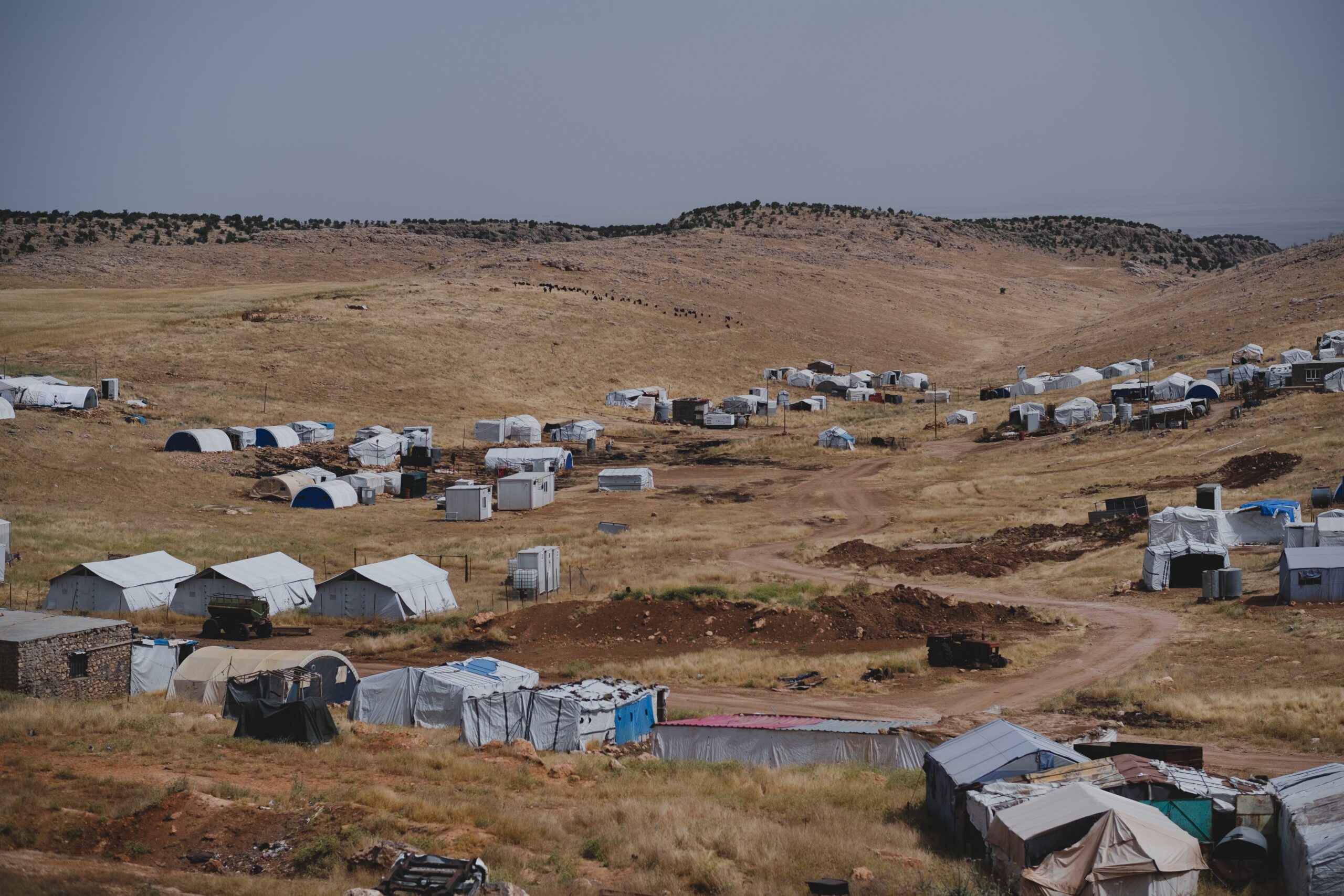
“We have the capacity, and we are still ready to accept more refugees” (Gliński,2022). This warm and welcoming approach towards Ukrainian refugees was proposed by Poland’s Deputy Prime Minister and Minister of Culture, Piotr Gliński, in March 2022; while Poland was seeing refugees as existential threats to the nation for years. Just months earlier, in August 2021, in reaction to the wave of Afghan refugees’ demands, Gliński stated, “Poland defended itself against the wave of refugees in 2015 and will also defend itself now” (Gliński,2021).
Beyond all discussion about these discriminatory approaches towards refugees from the global south compared to Ukrainian refugees, that mirror the double standards and racism of Europe’s responses towards refugees, this blog aims to open up a discussion on how approaches to reception of refugees in different parts of the world demonstrate the host societies’ horizon of belonging and the way that societies define who is an insider and who an outsider to them. Let me start my discussion with the story of a refugee, not in European countries but miles away in Iran, the host of one of the largest refugee populations in the world.
“The first time I noticed I am Afghan, not Iranian, I was nine years old when the police officers came to our house to arrest my father as an illegal immigrant.” (Zahra, Afghan refugee in Tehran).
When Zahra told her story, she was 34; now, unlike when she was nine, she knows well that she could not belong to Iranian society. The policies she faces every day, including the law that deprived her of studying in Iranian public schools between 1996-2015 and did not allow her to open a bank account, buy a SIM card in her name, own property or request organ donation in hospitals. Besides, other similar discriminatory policies that Afghan refugees experience every day in Iran remind her regularly that she is alien to Iranian society. Zahra’s story has been part of the general history of the Afghan refugee in Iran. Let us consider twenty years ago, just years before she noticed she did not belong to Iranian society. At that time, she and other Afghan immigrants and refugees had access to different public outcomes such as free education, employment, and healthcare systems in Iran.
In 1979, the first significant movement of Afghans to Iran occurred due to the Soviet Invasion and occupation of Afghanistan, coinciding with the Islamic Revolution and the establishment of the Islamic Republic of Iran. During this period, the Iranian government took an open-door strategy, and around three million Afghans entered Iran (Abbasi-Shavazi and Sadeghi,2012).
These waves of Afghans entering Iran were called Muhajirin (with etymological roots in hijra). During the first decade after the Islamic revolution, under the influence of the idea of the leader of Iran at that time, Ayatollah Khomeini, that stated, ‘Islam has no borders’ (Khomeini’s speech in Bazar, 1982); Afghan refugees were considered Muslims who struggled to maintain religious faith in the face of the Soviet Union. So, the Islamic Republic of Iran, as an Islamic state, considered itself responsible for welcoming Muhajirin and serving them (Safri, 2011). However, during the later wave of movement of Afghan refugees in the years 1992 and August 2021 as a result of the rise of the Taliban, this approach was no longer repeated by the Iranian state.
In the aftermath of the Iran-Iraq war, Iran changed its strategies toward Afghan refugees and began to introduce stricter and more restrictive policies and laws toward Afghan refugees. During these years, the government of Iran, through the Repatriation programme, introduced Afghan refugees as Alien and Foreign Immigrants (اتباع بیگانه) that should be encouraged to leave Iran or their movement in the country should be limited out of concern for Iran’s national security.
“In 1993, due to the Repatriation programme, I, as an Afghan immigrant, was banned from studying at public school; it was my first experience of discrimination after nine years of settlement in Iran” (Zahra, Afghan refugee in Tehran).
Beyond all discrimination that Zahra and all Afghan refugees experienced under the influence of the Repatriation programme, the question raised is, what tells Zahra that you do not belong to Iran anymore and are an Alien in Iranian society? In other words, what changed in Iranian migration policy that turned the Afghan population in Iran from Muhajir to an Alien (اتباع بیگانه)?
During the Repatriation programme, the Iranian government justified its policy by invoking economic hardship. The question raised here, however, is how we can explain the open-door policy towards refugees in the first decade after the revolution in Iran, as at that time too Iran was undergoing a hard time in its post-revolution era and coping with war and political unrest.
The discursive shift from Muhajer to an Alien (اتباعبیگلانه) to describe Afghan refugees in Iran demonstrates “how the different solutions to the same problem have been constructed. More importantly, how these different solutions result from a specific form of problematization.” (Rabinow,1998 p.390).
These ups and downs in Iran’s migration policies toward Afghans should be understood as part of the post-revolutionary state-building process that demonstrates inclusive and exclusive features of who belongs and who does not belong to Iranian society. In other words, this discursive change provides an opportunity to ask what justified the distinction between insider and outsider in Iranian society after 1992.
After the Iran-Iraq war, the first government called the construction government, introduced Afghan refugees as Alien and Foreign. The year 1992 was the first time that the migration minister of the construction government used the notion of alien and foreign instead of Muhajir for Afghan refugees. The government that mobilised under the banner of the construction project started the project of rationalising the government’s ideology that was linked to the spread and expansion of Neo-liberal policies in the Iranian state. This rationalisation of started with an economic program that affected government policies in different fields, especially the migration policy toward the Afghan refugees, depriving them of all rights that they could access as Muhajir.
The Repatriation programme of Afghan refugees in 1992 reflects a specific grammar of exclusion, which is not independent of mainstream global discourses on refugees. What I mean by the grammar of exclusion of refugees in the global order is not about a special form of mobility and movement of displaced people to a new country, but rather a particular interpretation of this movement which has formed in favour of citizens. In the dominant global order, human beings are divided into two categories; humans who are citizens of the nation-state or humans who want to be a citizen of the new nation-state (refugees). This interpretation of refugeehood is based on the assumption that when refugees become stateless, they are considered alien to social and political rights that is limited to the citizen. In other words, being a refugee is considered a transition period of missing being a citizen in one nation-state to become a citizen of a new nation-state. The discriminatory experience of the Afghan refugees in Iran after the Repatriation programme is tied with liberal discourses that consider refugees as alien to social and political rights that are limited to citizens.
This blog aimed to argue for an understanding of the problematic of refugees as a matter of belonging, which demonstrates the horizon of being of societies and communities. The emergence of Alien-foreign in the immigration vocabulary of Iran’s migration policies demonstrates the formation of a new subjectivity based on liberal-nationalist horizons. Despite anti-liberal claims of the Iranian government as an Islamic state in the last decades, the position of refugees in Iranian society, as a means of reading the contemporary political context of Iran, mirrors the shift in the Islamic Republic of Iran’s horizon of belonging to liberal-nationalistic standards in the last three decades.
Additional Reference
Abbasi-Shavazi, M.J., Sadeghi, R., Mahmoudian, H. and Jamshidiha, G. (2012). Marriage and Family Formation of the Second-Generation Afghans in Iran: Insights from a Qualitative Study. International Migration Review, [online] 46(4), pp.828–860. Available at: https://www.jstor.org/stable/41804865 [Accessed 10 Dec. 2022].
Safri, M. (2011). The Transformation of the Afghan Refugee: 1979-2009. Middle East Journal, [online] 65(4), pp.587–601. Available at: https://www.jstor.org/stable/41342742 [Accessed 19 Dec. 2022].
Author’s bio
Mona Makinejad is a PhD student at the School of Sociology and Social Policy at the University of Leeds. Her PhD project focuses on Refugees as political subjectivity: Afghan refugees in Iran. Further research interests include Refugee and Migrants Studies, Critical Muslim Studies, Decoloniality Studies, and race and racism.

Related Blogs

The Rebel Team: Football and Algeria’s Liberation
Image credit: Wikimedia: https://commons.wikimedia.org/wiki/File:Jubilee_FLN_soccer_team_1974.jpg (Mustapha Zitouni standing, 5th from the right; Rachid Mekhloufi sitting, 2nd from the right) History reminds us that, like literature and art, football can embody a...
Reflections on Islam, Muslimness and Decolonisation – I
*Yasin Aktay’s four-part series is a contribution to Critical Muslim Studies that critically engages with S. Sayyid’s Recalling the Caliphate as a means of reflecting on the contemporary manifestations of the Muslim Question.Image credit: photographs by Johanna Loock,...
Reflections on Islam, Muslimness and Decolonisation – II
*Yasin Aktay’s four-part series is a contribution to Critical Muslim Studies that critically engages with S. Sayyid’s Recalling the Caliphate as a means of reflecting on the contemporary manifestations of the Muslim Question.Image credit: photographs by Johanna Loock,...