

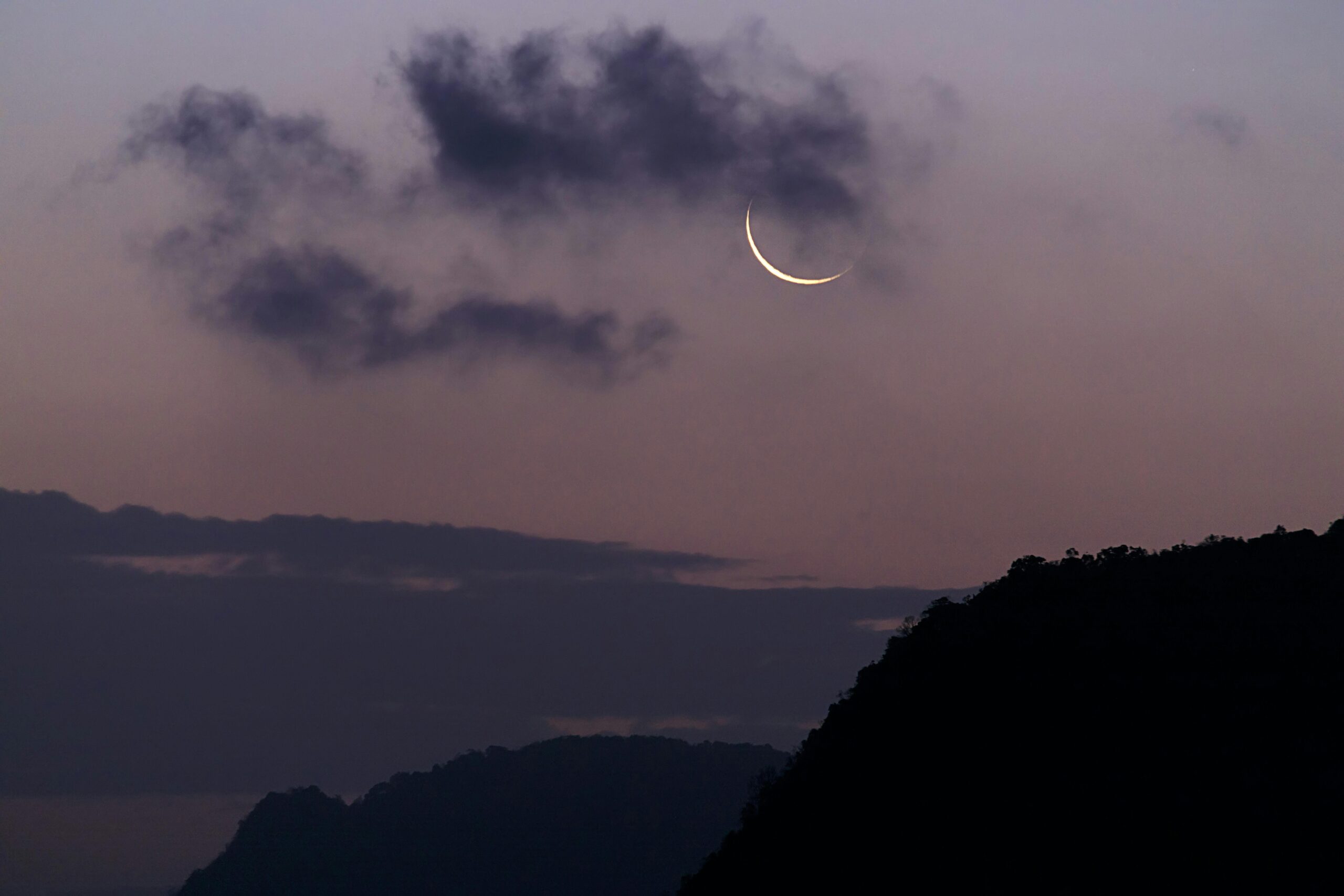
That the end of Ramadan—an atmosphere we enter with deep love and festivity, welcoming its arrival and grieving its departure—culminates in a celebration called Eid is not something easily understood by those who have not truly grasped this spiritual climate. For this reason, some assume that Eid is merely an expression of relief, a joy at having gotten through the hardships of Ramadan. At times this takes the form of harmless humour, not always ill-intentioned. But ultimately, it stems from perceiving Eid as nothing more than a festival, a moment of joy and entertainment.
Yet Eid, like Ramadan, is itself an act of worship. It is a symbol that completes Ramadan, one that calls for a deeper realization of its meaning. The enthusiasm with which Ramadan is welcomed in places like Siirt—where the mélédé fire is lit—is not a farewell to it, but an استقبال (welcoming) of Eid as another form of devotion. Reconciling with those we have fallen out with, visiting relatives, maintaining ties of kinship, bringing joy to the elderly and to children—all these are part of the ritual life of Eid that completes Ramadan.
There is also the question often raised: “Can there really be Eid when Muslims are suffering so much, when there is sorrow everywhere?” This question itself offers an important opportunity to reflect both on the nature of suffering and on the meaning of Eid. Our dear friend Vahdettin İnce once posed this question in a message of Eid greeting and offered a profound answer:
“Can there be Eid where there is ظلم (oppression), massacre, exile, destruction, and tears? Yes, there can. Because the Muslim, in every condition, is ultimately on the winning side.”
Today, as we witness the ongoing catastrophe in Gaza—now extending over hundreds of days—and as Muslims in Yemen, Myanmar, and many other parts of the world continue to endure ظلم and hardship, does Eid lose its meaning?
As İnce rightly affirms: certainly not.
First, from the perspective of those who endure suffering, these hardships, these assaults, and even martyrdom are outcomes that arise in the course of a life rightly lived in the path of God. Those who know their direction, who live as they are meant to live for the sake of Allah, also engage in struggle (jihad) against oppression. At the end of this struggle, there may be victory—or martyrdom. In either case, the Muslim is not the loser.
Today, the people of Gaza are losing nothing. On the contrary, through their unmatched dignity and steadfastness, they are among the most spiritually victorious people in the world. With their honour, their freedom, and their refusal to bow before ظلم, they win—even in death. It is for this reason that, amidst all the destruction and loss, it is often the people of Gaza who embody the deepest sense of Eid. Their ability to experience and express this spirit shows that they have grasped its meaning more profoundly than most.
Death is a truth; every soul shall taste it. But when death is met with meaning, when life is completed with a conscious and principled stance, then even mortality becomes part of a greater fulfillment. Eid, above all, is about attaining the awareness of gratitude to Allah in every condition. If we belong to Allah and will ultimately return to Him, then who could be more prosperous than those who knowingly and willingly offer their lives and possessions in His path?
For the people of Gaza—and for all those who live rightly—no calamity prevents them from عبادت (worship), from drawing nearer to Allah, or from feeling His presence more deeply. In these long trials, they have demonstrated to the entire world the depth, beauty, and authenticity of this consciousness. Eid is their right—but they celebrate it not as mere festivity, but as a manifestation of gratitude that persists under all circumstances.
Second, while their endurance in suffering is a sign of عظَمة (greatness), the question remains: is it right for us to celebrate Eid while they suffer?
Here again, we return to the same point. We must move beyond a conception of Eid as a worldly entertainment, a holiday, or an occasion for self-centered indulgence. It is true that for many, especially with extended public holidays, this time may indeed be reduced to such meanings. But one must ask: how, then, was Ramadan lived?
Throughout the year, human beings produce countless chains that restrict their freedom. Each year, Eid offers—especially to those who have demonstrated the will of fasting for a month and experienced fasting as a form of liberation—the definitive path to break free from these chains.
To partake in Eid is to partake in the One who invites us. It liberates us from the pathological narratives that divide us, fragment us, and imprison us within ourselves, and turns our faces toward the essential unity—the oneness inherent in existence itself.
Eid is an ayah—a sign, a verse. Like all signs, it requires the opening of the eyes and ears of the heart. When we surrender to the mindset that reduces Eid to a mere holiday, this verse is neither seen nor heard. When a verse is recited, one must listen with reverence and attentiveness; when a sign manifests, one must look with utmost alertness and awareness. When we reduce Eid to a mere vacation, this sign is neither seen nor heard. Just as a revealed verse must be listened to with humility, so too must a lived sign be witnessed with attentiveness.
It is also necessary to free ourselves from an understanding of Eid that is seen as being in contradiction with the “state of mourning” we are presumed to inhabit due to the suffering endured by Muslims in Gaza, Myanmar, Kashmir, East Turkestan, Iran, and many other parts of the world. Eid is lived and celebrated together with grief, pain, and hardship—interwoven with them. For Eid itself, with the joy it calls us to express, the gratitude it directs to Allah, its appreciation of others, the thanks it inspires toward people, and the reunion and reconciliation it brings, is in itself an act of worship.
For a humanity always prone to losing its way, Eid is a mercy and a blessing that points the path anew, that renews our orientation toward existence itself.
May Allah never deprive us of this mercy and blessing.
Eid Mubarak.
Author’s bio
Yasin Aktay is a Professor of Sociology in the Faculty of Humanities and Social Sciences at Ankara Yıldırım Beyazıt University. He is the editor-in-Chief of Tezkire Journal. Additionally, Aktay is a former Deputy Chairman of the AK Party and a former Member of Parliament.

Related Blogs
Reflections on Islam, Muslimness and Decolonisation – II
*Yasin Aktay’s four-part series is a contribution to Critical Muslim Studies that critically engages with S. Sayyid’s Recalling the Caliphate as a means of reflecting on the contemporary manifestations of the Muslim Question.Image credit: photographs by Johanna Loock,...

Reflections on Islam, Muslimness and Decolonisation – III
*Yasin Aktay’s four-part series is a contribution to Critical Muslim Studies that critically engages with S. Sayyid’s Recalling the Caliphate as a means of reflecting on the contemporary manifestations of the Muslim Question.Image credit: photographs by Johanna Loock,...

Reflections on Islam, Muslimness and Decolonisation – IV
*Yasin Aktay’s four-part series is a contribution to Critical Muslim Studies that critically engages with S. Sayyid’s Recalling the Caliphate as a means of reflecting on the contemporary manifestations of the Muslim Question.Image credit: photographs by Johanna Loock,...