

by Thahir Jamal Kiliyamannil
Blog 47
4 February 2021
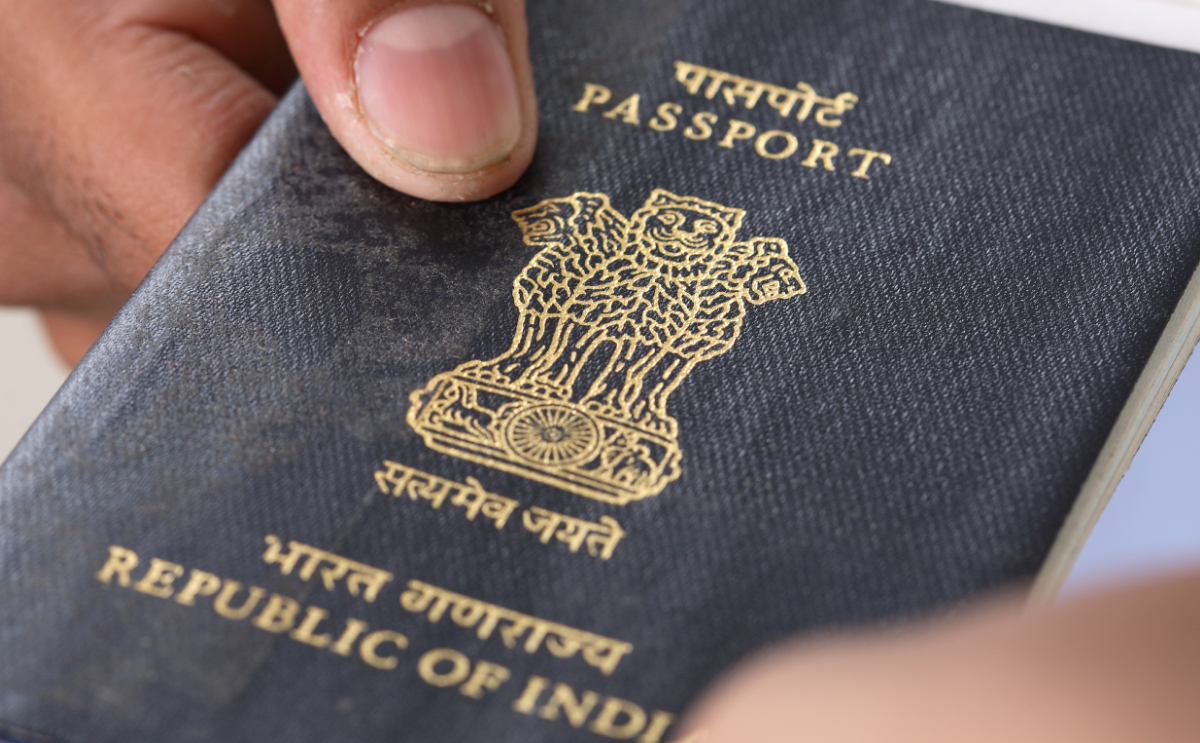
On 12th December 2019, the Citizenship Amendment Bill (CAA) was signed by the president of India, after being passed through both the houses of parliament. It provides an opportunity for obtaining citizenship to Hindus, Sikhs, Christians, Parsis, Buddhists, or Jains who are ‘illegal immigrants’ from Pakistan, Bangladesh and Afghanistan and who have been residing in India since before 31 December 2014. Muslims are selectively pushed outside the purview of granting citizenship under this Act. Simultaneously, there are serious attempts to implement a National Register of Citizenship (NRC), which will result in a large chunk (almost 2 million people in Assam alone) of the population being devoid of citizenship rights altogether. Of these excluded populations, the non-Muslim communities can obtain citizenship through CAA, while Muslims will be bereft of their rightful place in India.
The CAA and NRC evoked largescale demonstrations across the country, primarily mobilised by the Muslim community. Universities with a significant number of Muslim students, like Jamia Millia Islamia and Aligarh Muslim University, erupted with anger, producing waves of massive gatherings. Protests at Shaheenbagh became a model that inspired similar gatherings at other places, largely Muslim majority areas. But the State was not defenceless; the protesters were brutally assaulted by police and sangh parivar (Hindu nationalist) forces at various protest sites, which were later framed as riots. Case after case was booked against the protesters and protest leaders were targeted and slapped with draconian laws, pushing them into the prisons.
On the above, a lot has been already written. My aim is not to reproduce this literature to make a coherent and all-encompassing analysis, but instead to offer a limited attempt to analyse the discourses woven around CAA and the protests. After one year, looking back at CAA, and the related protests (still ongoing) produces multiple frames of reference. However, can there be a critical analysis from a Muslim vantage point?
Three Narratives of Protest
The response to CAA was not unidirectional. There were numerous protests, and as with any movement, dissent from within the protesting groups. There were three key arguments against CAA: that it is anti-constitutional as it destroys the founding principles of the constitution; anti-secular as it creates a differentiation between different religious communities; and anti-national as it threatens the national interest. These three narratives were often invoked together, as there is an assumption about the existence of a proto-type called ‘ideal India’. So, the discourse concluded with a call ‘to return,’ a return to the roots of the constitutional, secular and national ethos.
These arguments are problematic to some extent. The constitution is not just the preamble, but the remaining pages that have undergone numerous amendments and eliminations. In other words, presently CAA is also part of the constitution. The population who will be sent to the detention centres are not part of ‘We, the people of India’, as they are no longer ‘Indians’. This constitutional assertion also validates the idea of modern citizenship. It is the human as a member of ‘the people’, as Hannah Arendt would argue in The Origins of Totalitarianism, upon whom rights are conferred in the modern nation state. Inversely, the constitution is not addressing the victims of CAA and NRC, as they are already removed from ‘We, the people’. Also, the Constituent Assembly debates on various articles and provisions that have to be included in the constitution were taking place at a juncture when Muslims were granted a separate nation. With the formation of Pakistan, it is assumed that the political claims of Muslims are no longer tolerable in the ‘remaining India’. This has led to framing Muslims as a religious minority, who can, at the maximum, make claims for cultural rights. This erasure of the political demeans the agential claim of Muslims in any political movement. The paradox is that, then, to protest CAA is to protest the constitution, or invoking the constitution against the constitution.
Protest against CAA was understood as an assertion of a new nationalism ( for example Burkha Dutt) with a combination of Gandhi, Ambedkar, Bhagat Singh, Tricolor, national anthem and preamble of the constitution. There is nothing ‘new’ in this assertion, as it is not at all different from what has been practiced. What it misses is an understanding that Hindu Rashtra – the polity of Hindu rule and supremacy – is a territorial claim, rather than a theological claim[1]. Hindu Rashtra can be founded only in India, as to be a Hindu one has to be an Indian. Savarkar, the formulator of Hindutva philosophy, would make a converse claim that to be an Indian means to be a Hindu. That is why any assertion of ‘national’ immediately favours the Hindutva. Secondly, in India, as there was no cultural or social homogeneity, there is no pre-defined nation, but a State that exists through state apparatuses. Loss of citizenship produces statelessness. For Hannah Arendt, the political condition of the stateless does not even approximate that of a prison inmate; deprived of various freedoms, the inmate is nevertheless within the political and legal order[2]. The experience of the stateless was altogether more dangerous and unparalleled because they had lost ‘the right to have rights’. Then, any attempt to secure ‘human rights’ for those in the detention centres, may essentially require dismantling the idea of nationalism itself.
Just like the ‘new nationalism’, it would be interesting to ask: what would a new secularism look like? Secularism in the CAA protests acted as a disciplining force, to obscure the religious elements of Muslims, to not ‘communalise’ the protests (remember Congress Party’s Member of Parliament Sashi Tharoor’s remarks on the slogans). Muslims had to be super-conscious in their slogans, in their attire and in their selection of venues and speakers. A Muslim only grouping was discouraged, and dais always needed non-Muslims to make the protests ‘look secular’. As any political grouping of religious communities (majorly of minorities) is understood as communal in India, secularism is conceptualised as its antonym. Thereby, secular claims in the CAA protests made a ‘Muslim protest’ impossible, reducing it to individuated ‘protesting Muslims’. The individuation of citizens, thereby expelling them outside ‘the people,’ is the primary target of CAA. In other words, the secular narrative is not countering but rather contributing to the loss of ‘collective identity,’ ‘social rights’ and benefits. The people who are not in the record become ‘human beings in general,’ without an identity. None cares whether they are floating in the Mediterranean Sea or perishing in the detention centres.
How to Make Sense of CAA
Two things underwrite the new citizenship policy. One is an affirmation of Indian nationalism that is ‘imagined into existence’ not through any sort of bonding, but through the imaginary and real projection of its immediate enemies. ‘A daily referendum’ for such a nation requires reproducing the images of ‘enemy’ to explicate any politics. Anti-colonial nationalism was over with the retreat of colonialism and a substitute enemy had to emerge to hold the Indian nation. The anti-Muslim nationalism that got stabilised in the final formative stages of the Indian state then substituted the colonial enemy. Pakistan became the synonym of Muslimness and Indian nationalism thrived on the anti-Pakistan rhetoric (which may come as shock to many so-called progressives in Pakistan). With CAA, the anti-Muslim nationalism is apparent, and is officially legalised.
Second is the idea of a (new) Hindu, which is amorphous and ‘desi’. As Hindutva ideologue Golwalkar has infamously stated, ‘in this country the Hindus alone are the Nation and the Moslems and others, if not actually antinational are at least outside the body of the Nation.’[1] For these outsiders to be integrated into the nation, they should have a reverence for Bharat Bhumi (and not for Mecca or Vatican), which makes one a Hindu. The Hindutva ideologue’s conceptual Hindu nation is legalised through CAA to render India as a Hindu nation state. In a retrospective reading of CAA, it is possible to argue that the non-Hindu communities other than Muslims, like Christians, could shed their ‘foreignness’ to get completely ‘integrated’ into the project of the Indian nation. Or it may be that the Hindutva has elevated its stature, to include all the non-Muslims communities in its ‘new desi Hindu’ project. Islam, even after a thousand years of life in India, remains the ‘non-integrated’ and ‘non-indianised’ element.
This inclusivity of Hinduism is a temptation that the marginalized communities are unable to resist, seemingly giving a vertical mobility for the under privileged. However, the new Hindutva is not merely a declaration Brahmin power; ‘Virat Hindu’ does not monopolise the power, but shares it unevenly, producing a new caste hierarchy. It tends to appropriate anti-caste resistance and accommodate differences under the hidden grand schema of Hindu Rashtra. Understanding this new caste order and mechanism is essential for producing any sort of meaningful resistance. It is not only the exclusion of Muslims that has to be countered, but the ‘inclusivity’ of Hindu Rashtra.
Savarkar’s idea of constitutional majoritarianism[1] will help us to understand the legalisation of the ‘Muslim enemy’ and ‘new Hindu’. He imagined a constitutionally guaranteed democratic majority of Hindus. Equal rights for Muslims, according to him, is limited to having religious, cultural and linguistic rights only (unfortunately what the Indian constitution also guaranteed to Muslims). Any political claims are threatening to the Hindu nation. With the foundation of a new nation state through constitutionally guaranteed equal citizenship, Savarkar says, ‘there is no need for any separate minority rights.’ The most striking feature of Hindu Rashtra is Savarkar’s proclamation that: ‘in no case can the Hindu majority resign its rights which as a majority is entitled to exercise under any democratic and legitimate constitution’. Without moving this paradox of constitutional majoritarianism, any movements will be unable to thwart the Hindu Rashtra.
In Indian history, there was never an ‘ideal India,’ but different warring groups (as Ambedkar termed it) with interests. So, a ‘call to return’ is never a solution, but an imagination of ‘something new’ that was never there. The new imagination will have to navigate the paradoxes and affirm the legitimacy and political agency of persecuted minorities. Affirming this political agency means legitimising the ‘Muslim protest’ that may seem to threaten secularism. But from a different angle, as Muslim political articulations would enable more effective participation of minorities, it could also possibly deepen the democracy. The necessity then is to accept ‘Muslim’ as a legitimate political category, who has the right to form groups and mobilise.
The exclusion of Muslims is not new in India; the Sachar committee report on the social, economic and educational condition of Muslims has evidently shown the depth of it. However, what the CAA does is to legalise the othering, shamelessly attempting political genocide on its own people. Any steps countering this would be marked as illegal, and when populations are on the verge of being declared as illegal, protests may certainly become illegal. However, in the end, legality is not the principle of justice and ethics.
Footnotes:
[1] A recent article by Sheshadri Chari, the former editor of RSS mouthpiece Organiser, argues that “The Sangh, in fact, believes that there is no need to create a Hindu Rashtra as India, that is Bharat, is already one. It is important to understand the ‘idea of Hindu’ as also the ‘idea of rashtra’ just as one hears about the ‘idea of India’.”
[2] For details, see Arendt H. The Origins of Totalitarianism [1951]. New York, 1973.
[3] Golwalkar, M. S. We Or Our Nationhood Defined. Bharat Publications: Nagpur, 1939.
[4] Savarkar, V D. Hindu Rashtra Darshan. Maharashtra Prantik Hindusabha, Poona.

Related Blogs
Reflections on Islam, Muslimness and Decolonisation – II
*Yasin Aktay’s four-part series is a contribution to Critical Muslim Studies that critically engages with S. Sayyid’s Recalling the Caliphate as a means of reflecting on the contemporary manifestations of the Muslim Question.Image credit: photographs by Johanna Loock,...

Reflections on Islam, Muslimness and Decolonisation – III
*Yasin Aktay’s four-part series is a contribution to Critical Muslim Studies that critically engages with S. Sayyid’s Recalling the Caliphate as a means of reflecting on the contemporary manifestations of the Muslim Question.Image credit: photographs by Johanna Loock,...

Reflections on Islam, Muslimness and Decolonisation – IV
*Yasin Aktay’s four-part series is a contribution to Critical Muslim Studies that critically engages with S. Sayyid’s Recalling the Caliphate as a means of reflecting on the contemporary manifestations of the Muslim Question.Image credit: photographs by Johanna Loock,...